By William P. Muhammad
- July 8, 2024
Supreme Court decision could change America as people know it
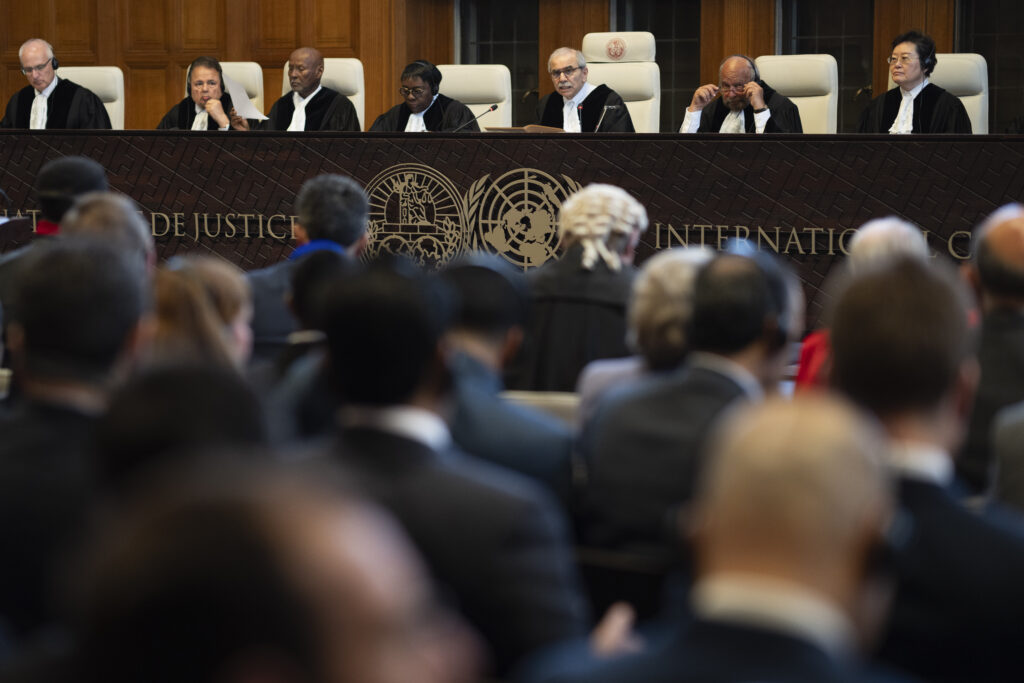
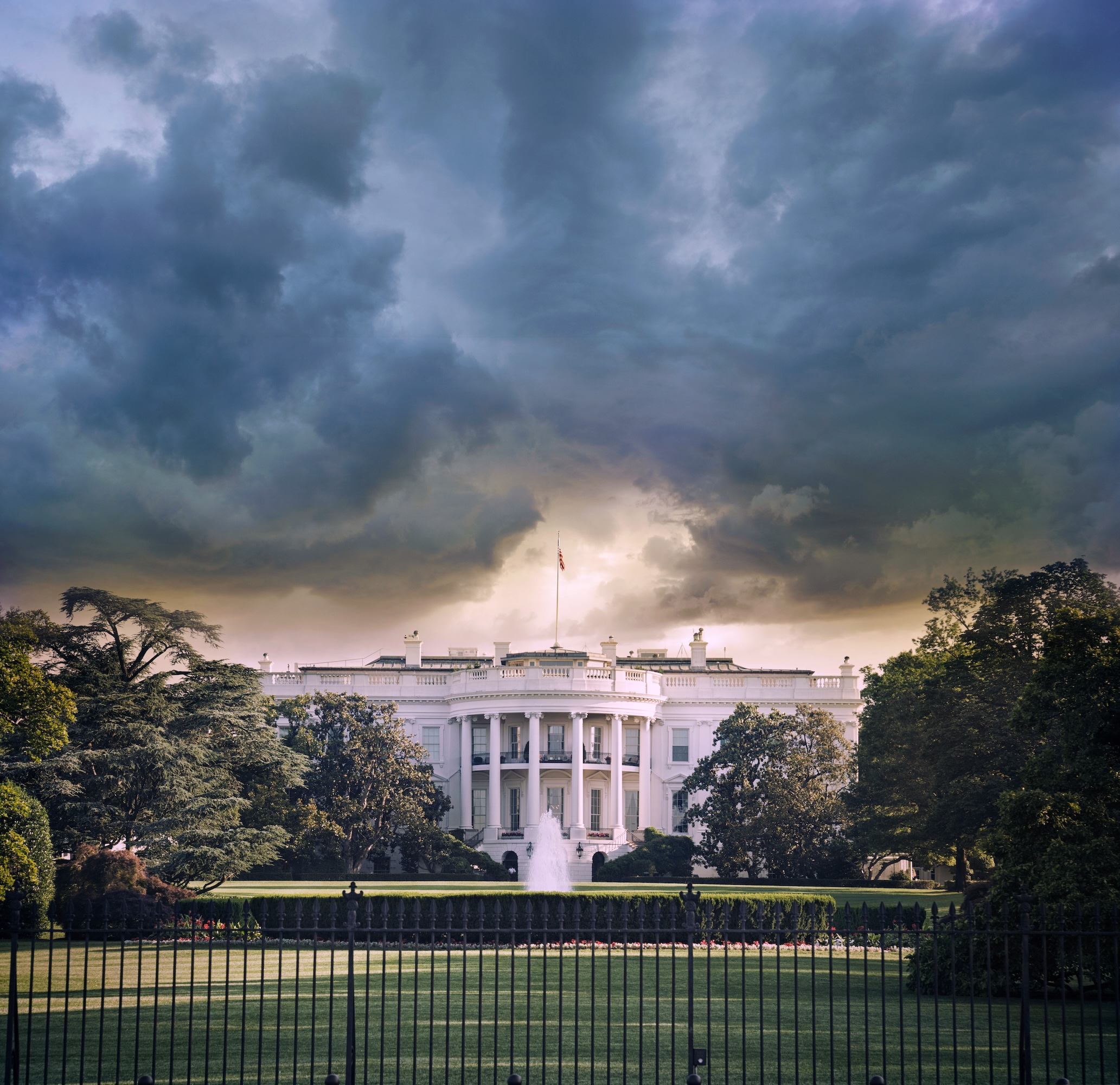
In a landmark 6-3 Supreme Court ruling, unprecedented powers of immunity were granted to the executive branch of the U.S. government, on July 1. The court’s decision now enables sitting presidents the authority to govern the United States without fear of prosecution, given that these decisions are executed in an “official capacity.”
The majority decision, made along partisan lines, constitutes the first time in American history the judiciary has empowered the presidency to trump the traditional checks and balances between the three branches of government.
Writing for the majority, Chief Justice John Roberts said of the indictments brought against former President Donald Trump, and the allegations of conspiring to overturn the 2020 presidential election through executive branch activities:
Advertisement
“We conclude that under our constitutional structure of separated powers, the nature of Presidential power requires that a former President have some immunity from criminal prosecution for official acts during his tenure in office.
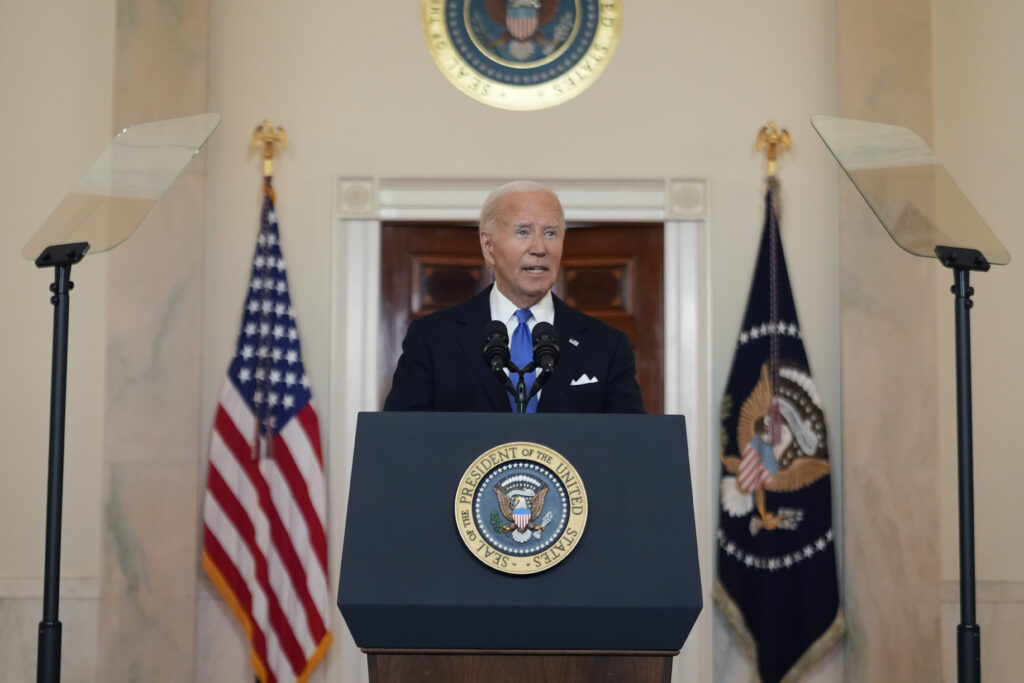
President Joe Biden speaks in the Cross Hall of the White House Monday, July 1, 2024, in Washington. (AP Photo/Jacquelyn Martin)
At least with respect to the President’s exercise of his core constitutional powers, this immunity must be absolute. As for his remaining official actions, he is also entitled to immunity.
At the current stage of proceedings in this case, however, we need not and do not decide whether that immunity must be absolute, or instead whether a presumptive immunity is sufficient.”
Adding that there is no immunity offered for a president’s unofficial acts, the Chief Justice noted on page 16 of his 43-page majority opinion that how that is determined remains undefined and has yet to be determined by a court of law, when he also wrote:
“Determining whether a former President is entitled to immunity from a particular prosecution requires applying the principles we have laid out to his conduct at issue. The first step is to distinguish his official from unofficial actions. In this case, however, no court has thus far considered how to draw that distinction, in general or with respect to the conduct alleged in particular.”
Submitting a blistering dissent albeit in the minority, Justice Sonia Sotomayor, joined by Justices Elena Kagan and Katanji Brown Jackson, wrote:
“Today’s decision to grant former Presidents criminal immunity reshapes the institution of the Presidency. It makes a mockery of the principle, foundational to our Constitution and system of Government, that no man is above the law.
Relying on little more than its own misguided wisdom about the need for “bold and unhesitating action” by the President, ante, at 3, 13, the Court gives former President Trump all the immunity he asked for and more. Because our Constitution does not shield a former President from answering for criminal and treasonous acts, I dissent,” Justice Sotomayor said.
On pages 29 and 30 of her dissenting opinion, she continued in part:
“Looking beyond the fate of this particular prosecution, the long-term consequences of today’s decision are stark. The Court effectively creates a law-free zone around the President, upsetting the status quo that has existed since the Founding.
This new official-acts immunity now “lies about like a loaded weapon” for any President that wishes to place his own interests, his own political survival, or his own financial gain, above the interests of the Nation.
“The President of the United States is the most powerful person in the country, and possibly the world. When he uses his official powers in any way, under the majority’s reasoning, he now will be insulated from criminal prosecution. Orders the Navy’s Seal Team 6 to assassinate a political rival? Immune. Organizes coup to hold onto power? Immune. Immune, immune, immune.
“Let the President violate the law, let him exploit the trappings of his office for personal gain, let him use his official power for evil ends. Because if he knew that he may one day face liability for breaking the law, he might not be as bold and fearless as we would like him to be. That is the majority’s message today.
“Even if these nightmare scenarios never play out, and I pray they never do, the damage has been done. The relationship between the President and the people he serves has shifted irrevocably. In every use of official power, the President is now a king above the law,” Justice Sotomayor unabashedly opined.
At least with respect to the President’s exercise of his core constitutional powers, this immunity must be absolute. As for his remaining official actions, he is also entitled to immunity.
At the current stage of proceedings in this case, however, we need not and do not decide whether that immunity must be absolute, or instead whether a presumptive immunity is sufficient.”
Adding that there is no immunity offered for a president’s unofficial acts, the Chief Justice noted on page 16 of his 43-page majority opinion that how that is determined remains undefined and has yet to be determined by a court of law, when he also wrote:
“Determining whether a former President is entitled to immunity from a particular prosecution requires applying the principles we have laid out to his conduct at issue. The first step is to distinguish his official from unofficial actions. In this case, however, no court has thus far considered how to draw that distinction, in general or with respect to the conduct alleged in particular.”
Submitting a blistering dissent albeit in the minority, Justice Sonia Sotomayor, joined by Justices Elena Kagan and Katanji Brown Jackson, wrote:
“Today’s decision to grant former Presidents criminal immunity reshapes the institution of the Presidency. It makes a mockery of the principle, foundational to our Constitution and system of Government, that no man is above the law.
Relying on little more than its own misguided wisdom about the need for “bold and unhesitating action” by the President, ante, at 3, 13, the Court gives former President Trump all the immunity he asked for and more. Because our Constitution does not shield a former President from answering for criminal and treasonous acts, I dissent,” Justice Sotomayor said.
On pages 29 and 30 of her dissenting opinion, she continued in part:
“Looking beyond the fate of this particular prosecution, the long-term consequences of today’s decision are stark. The Court effectively creates a law-free zone around the President, upsetting the status quo that has existed since the Founding.
This new official-acts immunity now “lies about like a loaded weapon” for any President that wishes to place his own interests, his own political survival, or his own financial gain, above the interests of the Nation.
“The President of the United States is the most powerful person in the country, and possibly the world. When he uses his official powers in any way, under the majority’s reasoning, he now will be insulated from criminal prosecution. Orders the Navy’s Seal Team 6 to assassinate a political rival? Immune. Organizes coup to hold onto power? Immune. Immune, immune, immune.
“Let the President violate the law, let him exploit the trappings of his office for personal gain, let him use his official power for evil ends. Because if he knew that he may one day face liability for breaking the law, he might not be as bold and fearless as we would like him to be. That is the majority’s message today.
“Even if these nightmare scenarios never play out, and I pray they never do, the damage has been done. The relationship between the President and the people he serves has shifted irrevocably. In every use of official power, the President is now a king above the law,” Justice Sotomayor unabashedly opined.
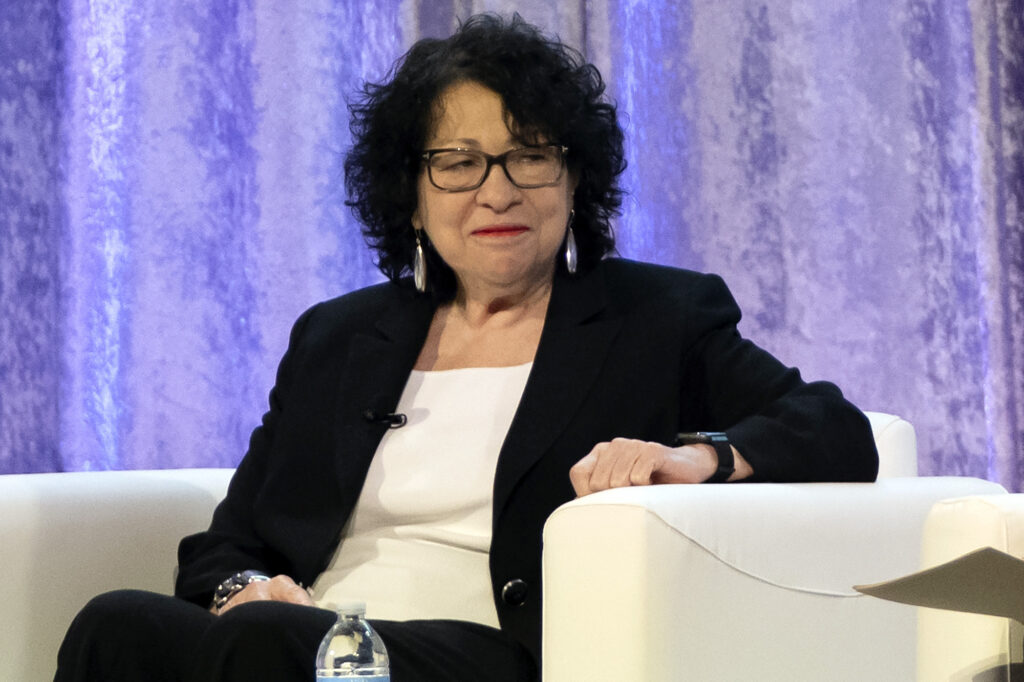
Supreme Court Justice Sonia Sotomayor attends a panel discussion, Feb. 23, 2024 in Washington. The Supreme Court allowed a president to become a “king above the law,” in the use of official power, Sotomayor said in a biting dissent Monday, July 1, that called the majority opinion on immunity for former President Donald Trump “utterly indefensible.” Joined by the court’s two other liberals, Sotomayor said the opinion would have disastrous consequences for the presidency and the nation’s democracy by creating a “law-free zone around the president.” (AP Photo/Mark Schiefelbein, File)
Unprecedented implications
Eric McDaniel, a professor in the Department of Government at the University of Texas at Austin, told The Final Call that the July 1 Supreme Court decision will have far and wide-ranging consequences and that the court victory handed to former President Trump will have an impact well beyond the upcoming 2024 elections in November.
“One of the concerns that people have had for quite a while now is the growth of the power of the presidency. A lot of that has come from the fact that Congress has not been efficient in getting a lot of things done and this decision does not help,” Prof. McDaniel insisted.
“If Congress were effective and shame mattered, both (Justices) Alito and Clarence Thomas would have stepped down by now, given the controversies they’ve been associated with, but shame is no longer part of this,” Prof. McDaniel said.
“There used to be a set of rules people would follow and they don’t follow those rules anymore. (Officials) often will abuse power and there will be no repercussions,” he noted.
“This has soured more and more people towards American democracy which will probably lead us more and more towards an authoritarian system, and that’s my big fear.”
Political scientist, Dr. Wilmer Leon, a radio talk show host and international media analyst, told The Final Call that the 6-3 Supreme Court decision is a travesty and that it demonstrates the effectiveness of the former Trump administration’s long-term goals when it stacked the courts with those sympathetic to self-serving outcomes.
Unprecedented implications
Eric McDaniel, a professor in the Department of Government at the University of Texas at Austin, told The Final Call that the July 1 Supreme Court decision will have far and wide-ranging consequences and that the court victory handed to former President Trump will have an impact well beyond the upcoming 2024 elections in November.
“One of the concerns that people have had for quite a while now is the growth of the power of the presidency. A lot of that has come from the fact that Congress has not been efficient in getting a lot of things done and this decision does not help,” Prof. McDaniel insisted.
“If Congress were effective and shame mattered, both (Justices) Alito and Clarence Thomas would have stepped down by now, given the controversies they’ve been associated with, but shame is no longer part of this,” Prof. McDaniel said.
“There used to be a set of rules people would follow and they don’t follow those rules anymore. (Officials) often will abuse power and there will be no repercussions,” he noted.
“This has soured more and more people towards American democracy which will probably lead us more and more towards an authoritarian system, and that’s my big fear.”
Political scientist, Dr. Wilmer Leon, a radio talk show host and international media analyst, told The Final Call that the 6-3 Supreme Court decision is a travesty and that it demonstrates the effectiveness of the former Trump administration’s long-term goals when it stacked the courts with those sympathetic to self-serving outcomes.
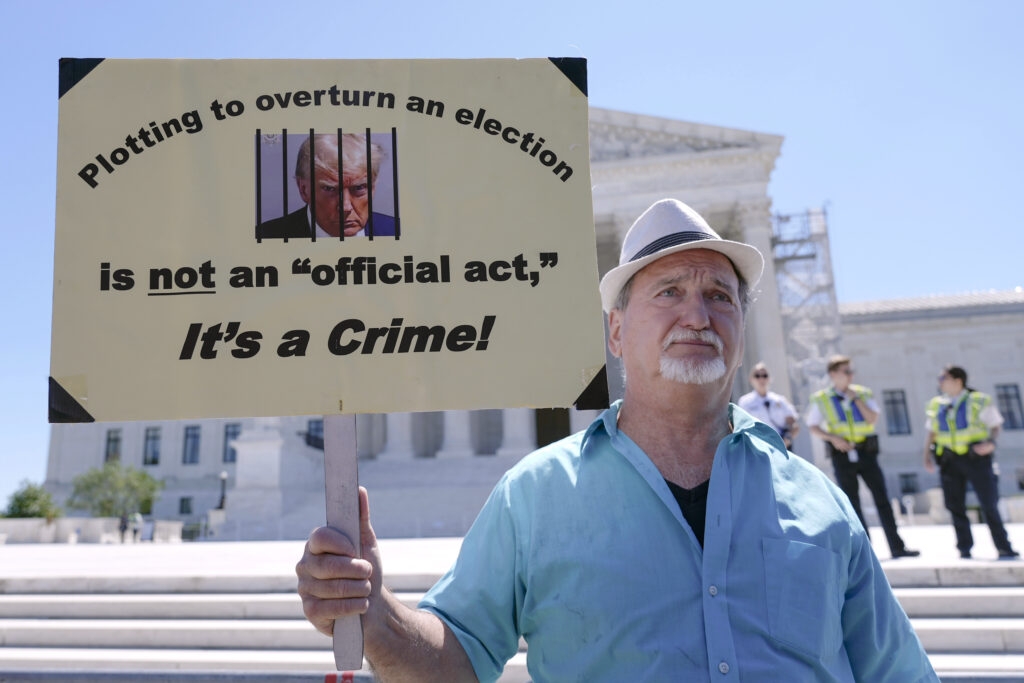
Gary Roush, of College Park, Md., protests outside the Supreme Court Monday, July 1, 2024, in Washington. (AP Photo/Mariam Zuhaib)
“Justice Roberts says that ‘presidents aren’t above the law, but must be entitled to presumptive immunity, to allow them to forcefully exercise the office’s far-reaching powers and avoid a vicious cycle of politically motivated prosecutions.’ What does that mean?”
Dr. Leon asked. “You’re not above the law, but the presumption is that you are above the law. This is saying, this is a nasty job and you’re going to have to do some things that a lot of people are not going to like,” he said of the possible foreign and domestic policies that could emerge from unchecked presidential powers.
Arguing that the former Obama Administration established a precedent of extra judicial killing, regarding American citizens, in this case including a minor on foreign soil, Dr. Leon suggested a sitting president now has the authority to be judge, jury, and executioner on U.S. soil.
Dr. Leon was referring to the 2010 CIA-conducted drone strike that killed American citizen Anwar al-Awlaki in Yemen whom the U.S. accused of being an “al-Qa’ida, jihadist.” The strike was ordered by then-President Barack Obama.
According to The Intercept, “Two weeks after the killing of Awlaki, a separate CIA drone strike in Yemen killed his 16-year-old American-born son, Abdulrahman, along with the boy’s 17-year-old cousin and several other innocent Yemenis.
The U.S. eventually claimed that the boy was not their target but merely ‘collateral damage,’” The Intercept reported in a January 30, 2017 article written by Glen Greenwald, titled, “Obama Killed a 16-Year-Old American in Yemen. Trump Just Killed His 8-Year-Old Sister.”
“(Justice) Sotomayor is absolutely right, ‘It’s a far greater danger if the president feels empowered to violate federal criminal law buoyed by the knowledge of future immunity,’ so what the court has done is not answer (the) question and that is the danger,” Dr. Leon said.
“It’s unchartered territory, they have created this grey zone (and) they’re erring on the side of danger. Because it’s presumptive immunity, you assume it’s authorized going in,” he warned.
A ‘future shock’ now
Regarding domestic policy, Dr. Raymond A. Winbush, director of the Institute for Urban Research at Morgan State University in Baltimore, told The Final Call that the high court’s decision will have a profound impact upon Black people in America—whether they accept it as reality or not.
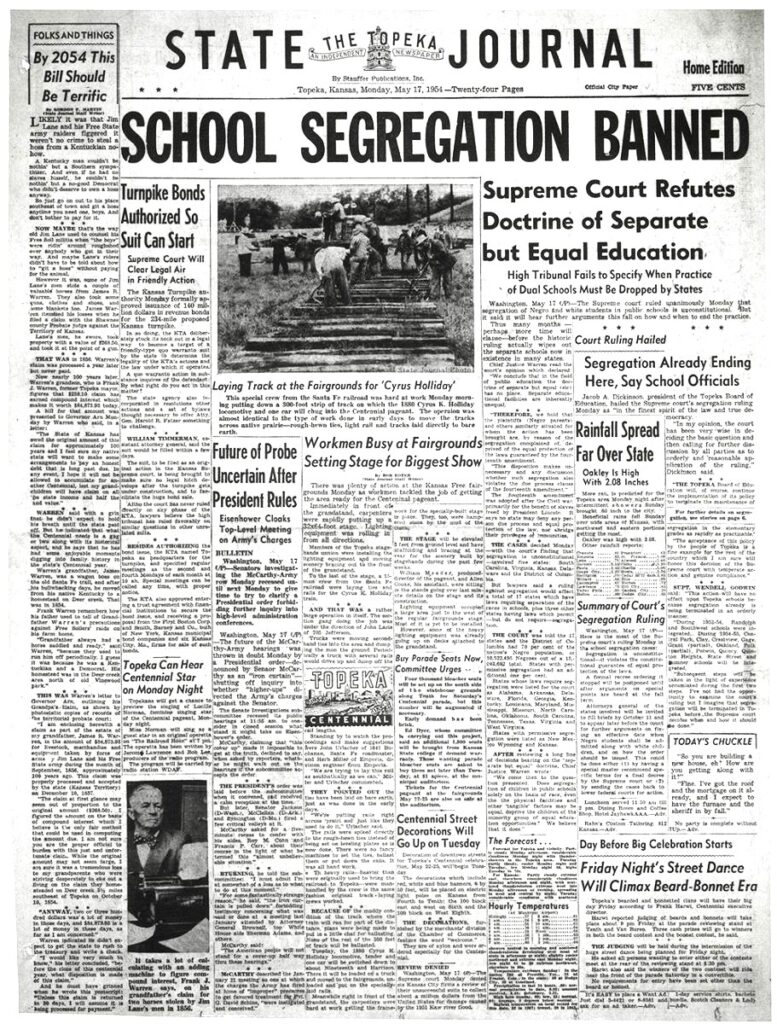
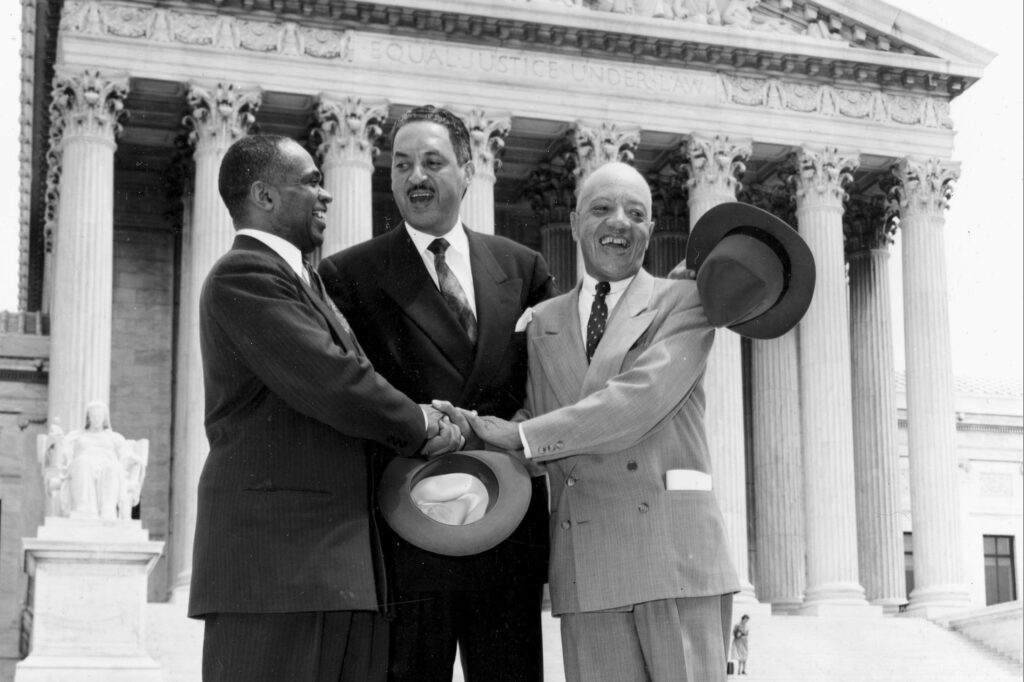
“There’s five great decisions by the U.S. Supreme Court and three of them involve Black people, the Dred Scott decision (1857), Plessey v. Ferguson in 1896, and Brown v Board (of Education) in 1954,” Dr. Winbush explained.
“This one is in that category as one of the most potentially racist decisions that the court has ever made, and the reason why is, for Black people, it essentially says the president of the United States is now a king and that a king can do no wrong.”
Revisiting the campaign statements and words of the former president, Dr. Winbush cautioned Black people, in particular, to carefully consider the time, what must be done, and to be aware that thoughtless or reckless actions and behaviors could have very grave consequences following the high court’s ruling.
“If Trump wins this presidency, he said in his first term that perhaps we should bring the U.S. Army or the National Guard into places like Chicago to stop crime,” Dr. Winbush said.
“Well, now you could say we’re going to move the U.S. Army into Black neighborhoods experiencing crime throughout the United States. He could literally declare martial law over crime.
He could do anything, and like Sotomayor said in her dissent, you could literally send SEAL Team Six to assassinate your political opponent and he’s immune,” Dr. Winbush said of how factions have been desirous of “retaking the country” as highlighted in the 900-page “Project 2025” agenda currently promoted by the Heritage Foundation.
“Justice Roberts says that ‘presidents aren’t above the law, but must be entitled to presumptive immunity, to allow them to forcefully exercise the office’s far-reaching powers and avoid a vicious cycle of politically motivated prosecutions.’ What does that mean?”
Dr. Leon asked. “You’re not above the law, but the presumption is that you are above the law. This is saying, this is a nasty job and you’re going to have to do some things that a lot of people are not going to like,” he said of the possible foreign and domestic policies that could emerge from unchecked presidential powers.
Arguing that the former Obama Administration established a precedent of extra judicial killing, regarding American citizens, in this case including a minor on foreign soil, Dr. Leon suggested a sitting president now has the authority to be judge, jury, and executioner on U.S. soil.
Dr. Leon was referring to the 2010 CIA-conducted drone strike that killed American citizen Anwar al-Awlaki in Yemen whom the U.S. accused of being an “al-Qa’ida, jihadist.” The strike was ordered by then-President Barack Obama.
According to The Intercept, “Two weeks after the killing of Awlaki, a separate CIA drone strike in Yemen killed his 16-year-old American-born son, Abdulrahman, along with the boy’s 17-year-old cousin and several other innocent Yemenis.
The U.S. eventually claimed that the boy was not their target but merely ‘collateral damage,’” The Intercept reported in a January 30, 2017 article written by Glen Greenwald, titled, “Obama Killed a 16-Year-Old American in Yemen. Trump Just Killed His 8-Year-Old Sister.”
“(Justice) Sotomayor is absolutely right, ‘It’s a far greater danger if the president feels empowered to violate federal criminal law buoyed by the knowledge of future immunity,’ so what the court has done is not answer (the) question and that is the danger,” Dr. Leon said.
“It’s unchartered territory, they have created this grey zone (and) they’re erring on the side of danger. Because it’s presumptive immunity, you assume it’s authorized going in,” he warned.
A ‘future shock’ now
Regarding domestic policy, Dr. Raymond A. Winbush, director of the Institute for Urban Research at Morgan State University in Baltimore, told The Final Call that the high court’s decision will have a profound impact upon Black people in America—whether they accept it as reality or not.
“There’s five great decisions by the U.S. Supreme Court and three of them involve Black people, the Dred Scott decision (1857), Plessey v. Ferguson in 1896, and Brown v Board (of Education) in 1954,” Dr. Winbush explained.
“This one is in that category as one of the most potentially racist decisions that the court has ever made, and the reason why is, for Black people, it essentially says the president of the United States is now a king and that a king can do no wrong.”
Revisiting the campaign statements and words of the former president, Dr. Winbush cautioned Black people, in particular, to carefully consider the time, what must be done, and to be aware that thoughtless or reckless actions and behaviors could have very grave consequences following the high court’s ruling.
“If Trump wins this presidency, he said in his first term that perhaps we should bring the U.S. Army or the National Guard into places like Chicago to stop crime,” Dr. Winbush said.
“Well, now you could say we’re going to move the U.S. Army into Black neighborhoods experiencing crime throughout the United States. He could literally declare martial law over crime.
He could do anything, and like Sotomayor said in her dissent, you could literally send SEAL Team Six to assassinate your political opponent and he’s immune,” Dr. Winbush said of how factions have been desirous of “retaking the country” as highlighted in the 900-page “Project 2025” agenda currently promoted by the Heritage Foundation.
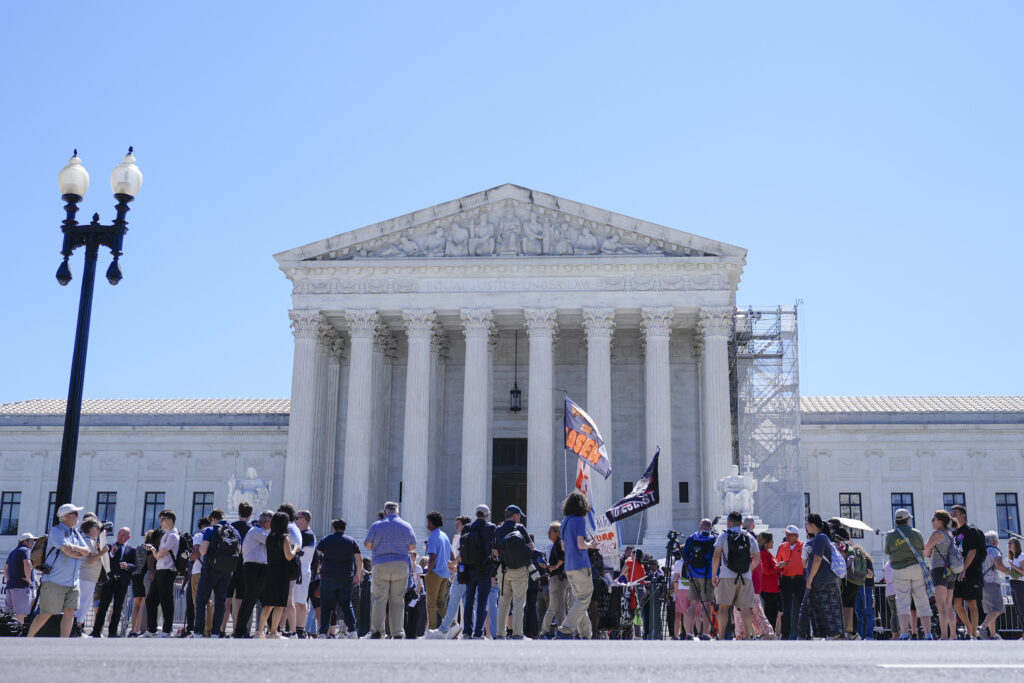
People protest outside the Supreme Court Monday, July 1, 2024, in Washington. (AP Photo/Mariam Zuhaib)
Likening the immediate aftermath of the July 1 decision and the political environment facing the United States to the international dangers facing the world on the eve of World War II, Dr. Winbush described how the danger of fascism is now rising in the United States where the masses of the people, regardless of color, have been driven to distraction through a “dumbing down” of the citizenry.
“Right now, the state, not just in this country, but globally, is trying to get people to think less so we have all of these distractions that are turning us away from our own thoughts,” Dr. Winbush insisted.
“We are being programmed at this time to be distracted; to not read; to not even think; they’re doing the thinking for us, like the quotation from (Agent) Smith in The Matrix. The Constitution is going out the window,” he said.
A final mercy for the oppressed and the oppressor
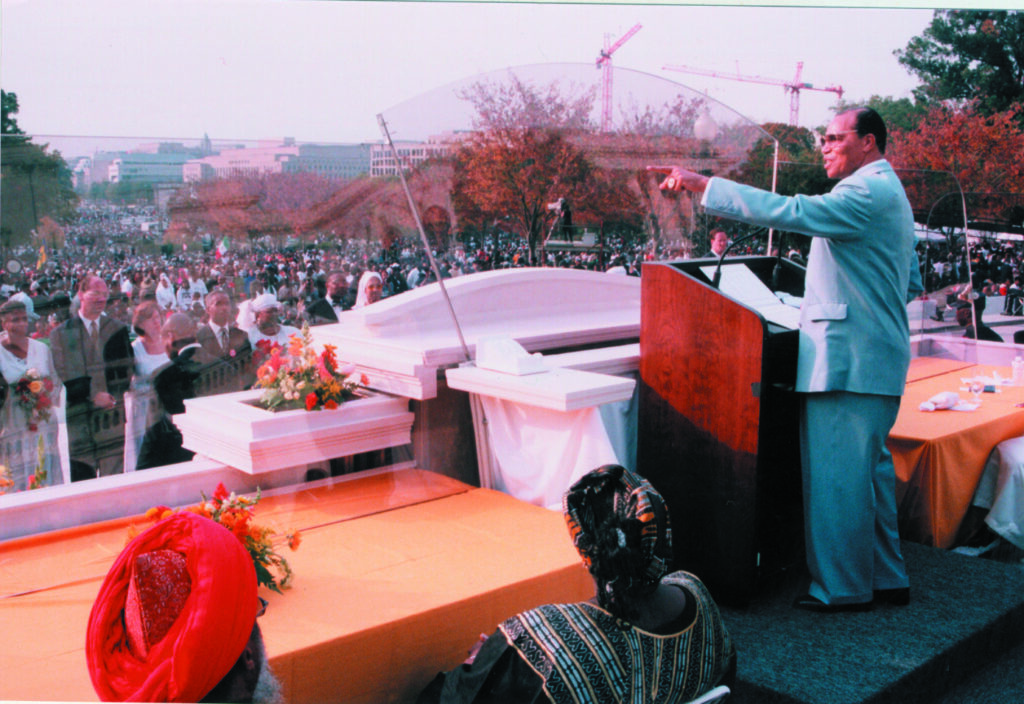
Houston-based Southwest Regional Student Minister Dr. Abdul Haleem Muhammad, of the Nation of Islam’s Mosque No. 45, under the leadership of the Honorable Minister Louis Farrakhan, told The Final Call that the Supreme Court has undermined the system of checks and balances that the framers of the Constitution established at the very founding of the republic, and as such, it has sped up the pace of the unraveling of a great nation that Minister Farrakhan has warned of.
“What the Roberts Court has done has empowered the chief executive to commit criminal acts under the color of official acts and thereby aid, assist, and abet the unraveling of a great nation called the United States of America,” Student Minister Muhammad said of what will hasten the fall of America as a powerful and independent nation as taught by the Most Honorable Elijah Muhammad and Minister Farrakhan.
Referring to the Flag of Islam that was given to the Honorable Elijah Muhammad and the Nation of Islam by its Founder, Allah (God) in the Person of the Great Mahdi Master W. Fard Muhammad, Student Minister Muhammad explained how it (Flag of Islam) represents that the Believer is made “free, justified, and equal” to all mankind and that separation unfolds spiritually, mentally, and then physically.
“For us to discuss separation is to assert our divine rights, our natural rights as humans made in the image and likeness of God,” Student Minister Muhammad asserted. “This is the same thing the founding fathers of this country did and the same thing that the founding fathers of the Republic of Texas did.
In both cases, they decided that their contemporary systems of government failed them and did not serve their inalienable rights,” he said.
“Soon and very soon, our people will come to realize that this current form of government is not serving or protecting them and they will be forced by circumstances to accept or reject separation as the best and only answer as outlined by the Honorable Elijah Muhammad.”
The Final Call encourages readers to view and study once again, the 2020 Saviours’ Day message: “The Unraveling of a Great Nation,” by Minister Farrakhan by visiting media.noi.org.
Likening the immediate aftermath of the July 1 decision and the political environment facing the United States to the international dangers facing the world on the eve of World War II, Dr. Winbush described how the danger of fascism is now rising in the United States where the masses of the people, regardless of color, have been driven to distraction through a “dumbing down” of the citizenry.
“Right now, the state, not just in this country, but globally, is trying to get people to think less so we have all of these distractions that are turning us away from our own thoughts,” Dr. Winbush insisted.
“We are being programmed at this time to be distracted; to not read; to not even think; they’re doing the thinking for us, like the quotation from (Agent) Smith in The Matrix. The Constitution is going out the window,” he said.
A final mercy for the oppressed and the oppressor
Houston-based Southwest Regional Student Minister Dr. Abdul Haleem Muhammad, of the Nation of Islam’s Mosque No. 45, under the leadership of the Honorable Minister Louis Farrakhan, told The Final Call that the Supreme Court has undermined the system of checks and balances that the framers of the Constitution established at the very founding of the republic, and as such, it has sped up the pace of the unraveling of a great nation that Minister Farrakhan has warned of.
“What the Roberts Court has done has empowered the chief executive to commit criminal acts under the color of official acts and thereby aid, assist, and abet the unraveling of a great nation called the United States of America,” Student Minister Muhammad said of what will hasten the fall of America as a powerful and independent nation as taught by the Most Honorable Elijah Muhammad and Minister Farrakhan.
Referring to the Flag of Islam that was given to the Honorable Elijah Muhammad and the Nation of Islam by its Founder, Allah (God) in the Person of the Great Mahdi Master W. Fard Muhammad, Student Minister Muhammad explained how it (Flag of Islam) represents that the Believer is made “free, justified, and equal” to all mankind and that separation unfolds spiritually, mentally, and then physically.
“For us to discuss separation is to assert our divine rights, our natural rights as humans made in the image and likeness of God,” Student Minister Muhammad asserted. “This is the same thing the founding fathers of this country did and the same thing that the founding fathers of the Republic of Texas did.
In both cases, they decided that their contemporary systems of government failed them and did not serve their inalienable rights,” he said.
“Soon and very soon, our people will come to realize that this current form of government is not serving or protecting them and they will be forced by circumstances to accept or reject separation as the best and only answer as outlined by the Honorable Elijah Muhammad.”
The Final Call encourages readers to view and study once again, the 2020 Saviours’ Day message: “The Unraveling of a Great Nation,” by Minister Farrakhan by visiting media.noi.org.